

Personal service
Our service is personal. Mikko, Mikael, and Joni serve our customers directly.
Quick action
In-stock products for export orders are dispatched within 2 business days.
A ball check valve is a reliable and simple check valve for both horizontal and vertical installations. A ball check valve is also nearly maintenance-free, so the valve does not need to be replaced at short intervals.
The operating principle of a ball check valve is based on the free movement of the ball inside the valve. This also makes the valve full bore and keeps it clean, even if the flowing medium contains impurities. Thanks to the full bore design, pressure losses are very low, which prevents significant back pressure from building up.
Would you like to send a request for a quote?
Please send us an email or contact us using the form.
Do you have a quick question?
Call or WhatsApp us.
Showing all 4 results
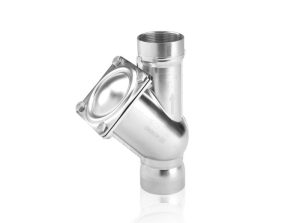
BALL CHECK VALVE, THREADED, ACID-RESISTANT STAINLESS STEEL
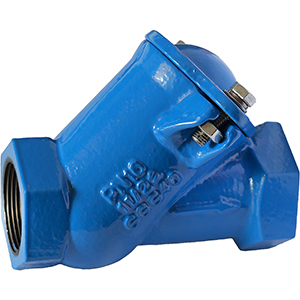
BALL CHECK VALVE, THREADED, CAST IRON
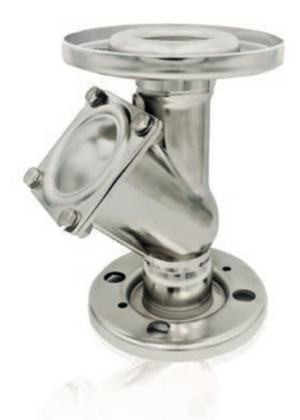
BALL CHECK VALVE, FLANGED, ACID-RESISTANT STAINLESS STEEL
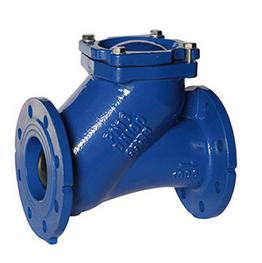
BALL CHECK VALVE, FLANGED, CAST IRON
A ball check valve is a simple but highly effective check valve whose main purpose is to prevent the backflow of liquid or gas in a pipeline. The valve works based on a freely moving ball that reacts to changes in the flow direction. When the liquid flows in the correct direction, pressure lifts the ball and allows the liquid to flow freely. When the flow stops or tries to reverse direction, the ball immediately drops onto the valve seat, closing the valve automatically and tightly.
The shape and material of the ball play a key role in the efficiency and durability of the valve. The balls are often made from rubber-coated steel or entirely from rubber, which enables tight closing and minimizes wear. In certain models, the balls can also be made from different plastic compounds, allowing them to better withstand aggressive chemicals and high temperatures.
A ball check valve has a simple structure, which ensures reliable operation. Ball check valves do not have springs or other mechanical parts that could wear quickly or require constant maintenance. This reduces downtime and makes the valve a long-lasting solution, especially for demanding applications.
Performance remains optimal even under varying pressure conditions and flow rates. For example, in low-flow conditions, the sensitive reaction of the valve ball ensures that closing takes place reliably and quickly. At higher flow rates, the flow resistance of a ball check valve remains low, which reduces pressure loss.
The ball in a ball check valve requires roughly half the opening pressure of a swing check valve, and the line stays open without springs or other mechanical auxiliary components. When the flow stops, the valve ball returns to its seat and closes the pipeline. Because of its simple structure, a ball check valve is practically almost maintenance-free.
Ball check valves are available from us with either threaded or flanged connections. The size options are shown at the bottom of the page.
Ball check valves are available in many different materials. In water treatment applications, such as wastewater treatment, cast iron body, epoxy-coated ball check valves are often used, with the ball usually rubberized with NBR or alternatively EPDM. In industrial applications, a ball check valve is often made from acid-resistant stainless steel, for example to improve its chemical resistance. In this case, the surface material of the ball can also be FPM. With the most demanding chemicals, plastic-bodied ball check valves are used, such as valves made from PVC plastic.
A common application for a ball check valve is in wastewater pumping stations, where the liquid is usually dirty in one way or another and the purpose of the ball check valve is to prevent backflow from the pressure line into the pumping station tank when the wastewater pump is switched off. A ball check valve is also suitable for other pumping applications where liquid is transferred from a lower level to a higher level, and the liquid must not flow back into the starting basin or tank after pumping ends. The liquid can be dirty or clean. The pumping station installation is shown below:
OPEN
The submersible pump is running “ON”, and as the pumped medium flows, the ball in the ball check valve has moved aside, allowing free flow through the valve.
CLOSED
The pump is switched “OFF”, and the flow in the pipeline stops. This causes the ball in the ball check valve to return to its seat, preventing the liquid in the pressure line from flowing back into the pumping station.
The ball check valves in our selection are specifically designed to reduce maintenance needs and ensure long-lasting operation even in demanding conditions. A ball check valve has a self-cleaning structure designed so that the movement of the ball automatically removes deposits and impurities from the inner surface of the valve. This feature makes ball check valves an excellent choice for applications where dirty liquids or liquids containing solid particles are handled, such as wastewater or industrial process water.
The self-cleaning structure does not only reduce the need for maintenance, but also extends the service life of the valve and improves the operational reliability of the system. In traditional check valves, deposits and blockages can cause malfunctions, but ball check valves remain operational without regular maintenance measures. This reduces system downtime, which is especially important in industrial and municipal engineering applications where continuous operation is necessary.
Ball check valves are designed to provide low pressure loss, making them energy-efficient and high-performing components for different piping systems. Low pressure loss means that liquid flow remains optimal, and the system’s pumping capacity is not unnecessarily lost as the liquid passes through the valve.
This feature is especially important in applications where flow rate and energy efficiency matter, such as industrial processes and municipal water treatment. Low pressure loss also improves the overall performance of the system. When the flow remains steady and efficient, the system operates more reliably and under less strain. This reduces wear on pumps and other system components, extending their service life and reducing the need for maintenance.
A ball check valve is energy-efficient, which not only reduces operating costs but also lowers the environmental impact of the system. When the pumping system operates at optimal power, energy consumption decreases, which is a major benefit especially in large facilities where energy savings can be significant. This makes ball check valves both an economical and environmentally sustainable choice.
A ball check valve is easy to install in both horizontal and vertical pipelines, which makes it a flexible solution for many different systems. Its simple structure and compact size enable quick commissioning and operation without complicated adjustments. BPI-Chempump’s specialists help choose the right valve size and model to match the system’s needs and requirements precisely.
Order a high-quality ball check valve from BPI-Chempump. By ordering a ball check valve and a possible rubber gate valve together with the pump, you save effort and possibly money, as the necessary components come from one place. For example, pumping station maintenance is easier when the ball check valve and other components arrive at the delivery address at the same time. Since we act as the supplier for the complete delivery, the supply chain is as short as possible, which reduces schedule-related delivery risks.
Contact our specialists, and we will find the best ball check valve for your specific application.

A ball check valve is especially suitable for wastewater treatment, pumping stations and other applications where liquids may contain impurities.
Ball check valves are usually made from cast iron, aluminum or stainless steel, and the balls may have rubber or plastic coatings.
A ball check valve is designed to cause very little pressure loss, which makes it efficient in different applications.
Ball check valves are usually simple to install in both horizontal and vertical installations, and they can be attached with either threads or flanges.
A ball check valve is almost maintenance-free, but regular inspection and cleaning can increase its service life and efficiency.
Ball check valves usually require only a small opening pressure and remain open during flow without springs or other mechanical components.
The service life of a ball check valve depends on the operating conditions and material, but they are designed to last a long time when properly maintained.
If a ball check valve breaks, it should be repaired or replaced as quickly as possible. Spare parts and repair services are available from manufacturers or authorized dealers. BPI-Chempump can replace a broken valve or supply spare parts.
You can buy ball check valves directly from BPI-Chempump, which means you are purchasing them directly from the importer. BPI-Chempump is a knowledgeable professional in ball check valves, pumps and filtration solutions.
Our staff is always ready to help you choose the right product. If you need more extensive consultation, you can book a free assessment appointment.
"*" indicates required fields

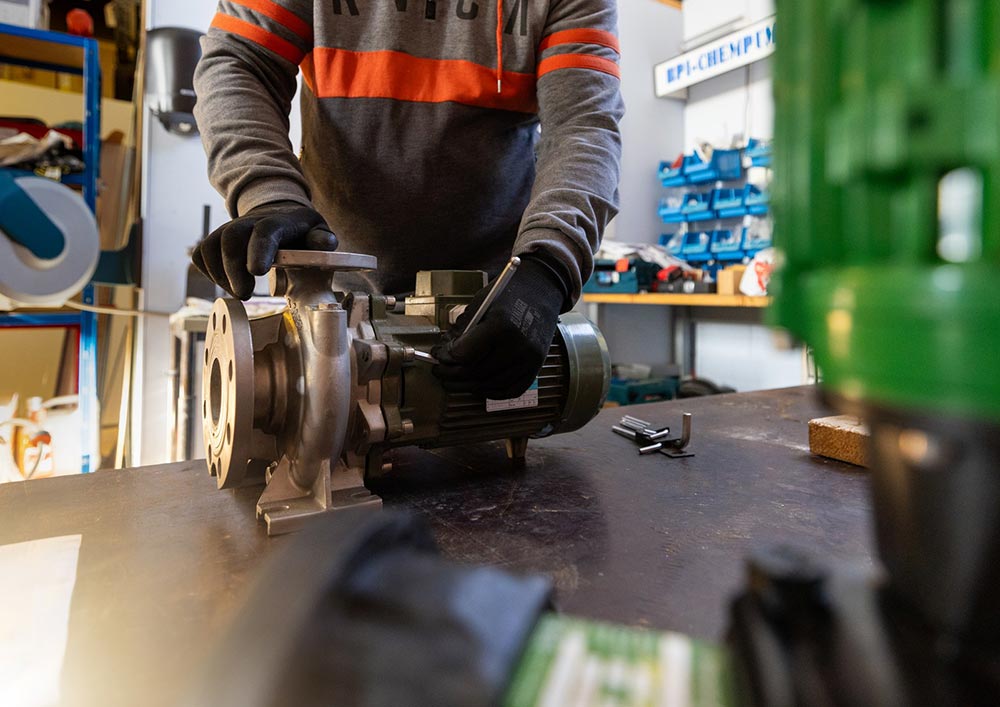
Pump maintenance is a critical part of industrial operations, ensuring that processes continue without interruption and at peak efficiency. BPI‑Chempump specializes in servicing a wide range of pumps to meet the diverse needs of industry.
Regular maintenance helps identify and resolve potential issues before they develop, ensuring continuous and reliable production. Scheduled servicing is the most effective and cost‑efficient way to guarantee the long-term, safe operation of your equipment.
Get in touch with a pump expert, and let’s get your pumps performing at their best!